
Whenever we visit Europe, we typically rely on public transportation to get around. While it works great in general, it kind of limits your choices when it comes to how many places you can visit if you only have a few days to spare. It also means we typically revisit the places we’re already familiar with, since we know how to optimize our itinerary.
The idea of renting a car and checking out other parts of Europe was growing on me for some time. Even better if it could be in an EV, but I assumed renting one would be pricey. To my surprise, Hertz had a very good rate on Tesla Model 3 at the Frankfurt airport (our usual landing hub), so we booked it in advance. I was a bit concerned, seeing the headlines about Hertz ditching Teslas as their rentals. Days before the trip I started receiving emails helping us renters to get familiar with the car, how to charge it etc. These messages boosted my faith that the possibility of Model 3 waiting for us was real. We finalized our itinerary and mapped all the charging stops along the way. All was set.
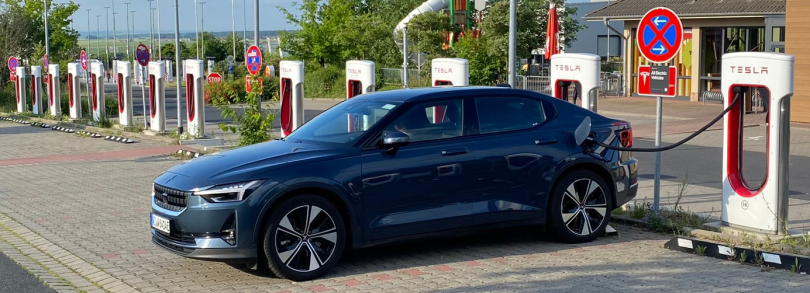
Unfortunately, my early concerns proved to be valid. Upon arrival, they didn’t have any Teslas, only a Fiat 500e. While cute, it would not accommodate us plus luggage, nor was the range sufficient, given our plans. Real bummer. I was then offered a Mercedes Benz C-class in compensation and I would have considered it if not for Hertz’s own policy for premium cars not allowed beyond certain country borders. Somewhat miraculously, they found the keys to a Polestar 2.
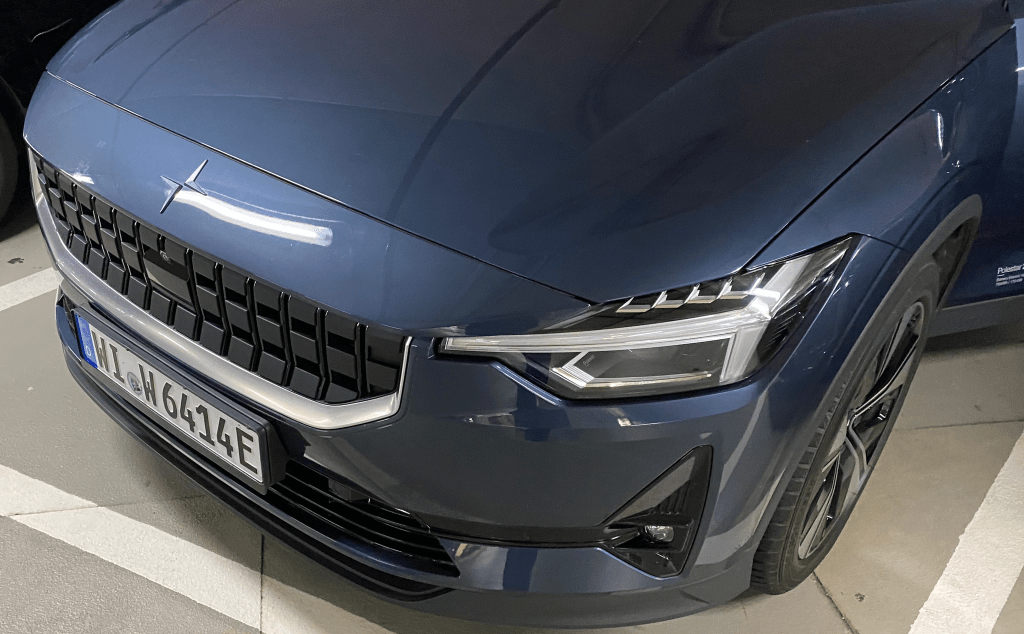
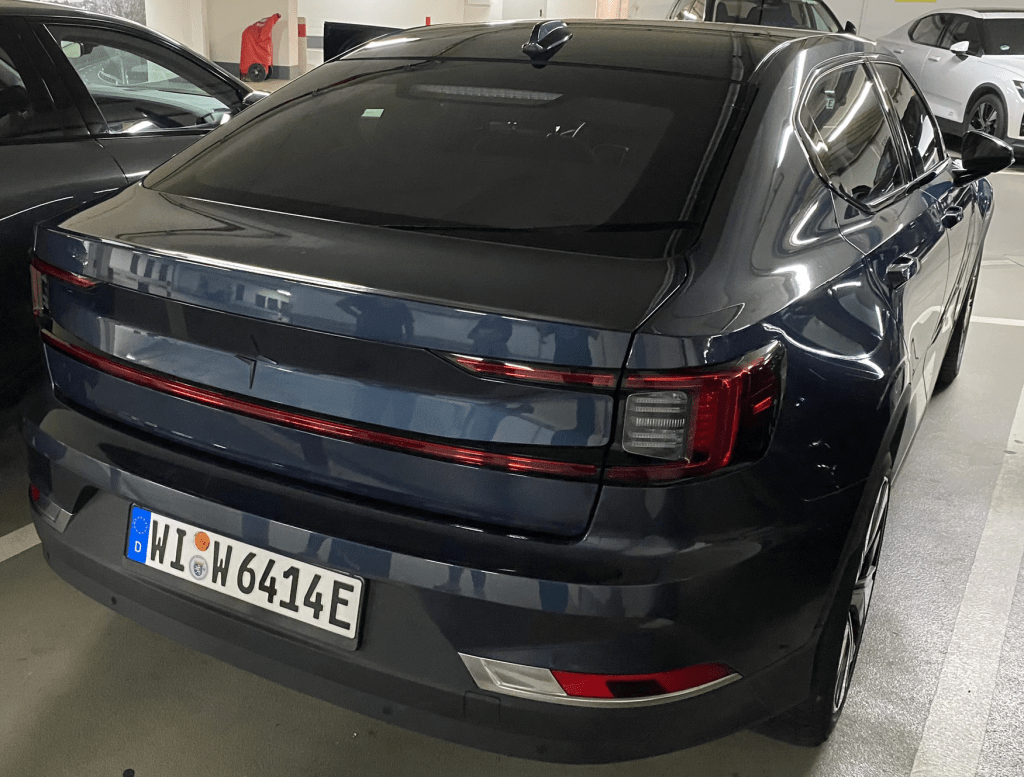
While not the Model 3 we were hoping for, I knew I would be fine for most of the journey, given that Tesla has opened up their supercharging network to other EVs equipped with CCS (the de facto standard for fast charging in Europe). The only concern at this point was the charging situation in Czech Republic and Poland, which were part of our itinerary. The associate eased me into it by mentioning that he recently travelled in a Polestar to Hungary and the Shell Recharge network made the journey effortless. The rental car came with the necessary RFID token/fob.
On the plus side, the Polestar 2 had better range as compared to the Model 3 Standard Range, so we would probably not have to stop as often either. So, after a bit of back and forth I decided to take it. Off we went!
* * *
How did the trip go then? Thanks to Tesla’s supercharger network it was a breeze, actually. All you have to do is pull into a slot, connect, confirm the stall number in the Tesla app and viola!

Most of the locations were rated up to 250 kW, so while the single motor Polestar 2 is rated at 133 kW max, charging was generally quick (10-15 minutes stops, mostly to have a buffer just in case).
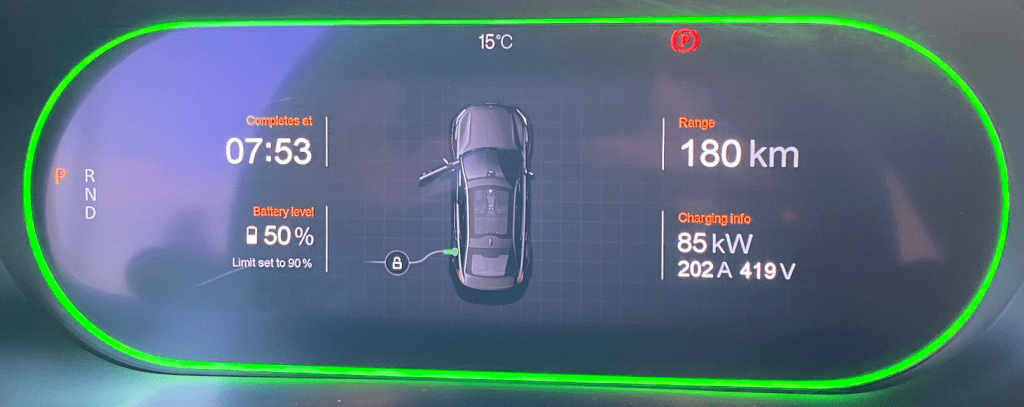
As expected though, we could not take advantage of superchargers in Poland (none of them are opened yet to other vehicles) and I had to search for a fast DC charger around. GreenWay came to the rescue, albeit it is pricey if you don’t have a monthly subscription (EUR 0.73/kWh during our visit). The only other hiccup was during the returning trip. We could not get a successful charge at Tesla’s Pilsen supercharger. Seems like the whole site was affected, as Tesla drivers were having problems juicing up their cars as well. Ironically, we chose this location to stay overnight specifically due to the charger’s proximity to the hotel. At the end, we managed to find a nearby E.ON station which worked with Shell Recharge token (provided with the car) and all was good. It could have been dicey, as we had an estimated 130 km of range remaining and the nearest other Tesla supercharger was 80 km away. This lone incident has reaffirmed once again that a robust and reliable infrastructure is a key to successful adoption of EVs.

How about the car itself? Did it leave us stranded or disappointed? We’ve spent 2 weeks and travelled 3000 kilometers together after all! I’m happy to report that Polestar 2 did just fine. I am not going to write an extensive review, as there are plenty around. Some personal observations below, mostly in comparison to our Tesla experience. First – the positives:
The likes
- Comfortable ride, handling and seats
- Great range, even in the single motor configuration
- Better charging curve than my aging Model S!
- Very little of “phantom” battery drain overnight
- Integrated Google Maps, including plenty of additional information such as road closures due to construction or flooding (parts of Bavaria were affected by floods during our trip)
- Intuitive on-screen trip planner, supporting waypoint and alternative routs. Built-in filter for preferred charging networks/types is a nice touch
- Frameless mirrors with great blind spot monitoring
- Automatic rain sensing windshield wipers that just work – Tesla could learn a thing or two here 😉
- Parking sensors and assistance (with 360° view).
It might come as a surprise, but there was nothing seriously annoying about the Polestar 2 that would be worth spilling the virtual ink over. Let’s just call them minor inconveniences:
Not-so likes
- Relatively small trunk space (as compared to Model 3)
- Frunk opening mechanism requiring 2 hands (traditional hood latch, like in ICE cars)
- Limited storage space in the center console (with a hidden cupholder)
- Cross-traffic auto-brake is a bit too sensitive.

It is a really well built and designed car. A proper EV and very fun to drive. I would definitely recommend to rent one as an alternative to Tesla, especially with the access to supercharger network. Public charging in Europe is still a mess and I despise the registration approach of different providers, but that’s another story.
* * *
Upon returning the car at the Frankfurt airport, the clerk ended our quick conversation with the statement that “electric cars are shit!”. To which my response was “Not this one!”. Not this one, buddy.
 evcharged.blog